
Silver plating
Bright, semi-bright and matte silver plating to ASTM B700, for copper busbars, switchgear contacts, connector pins and RF parts. Plated to the thickness on your drawing and checked in-house by XRF.
Variants Bright · Semi-bright · Matte
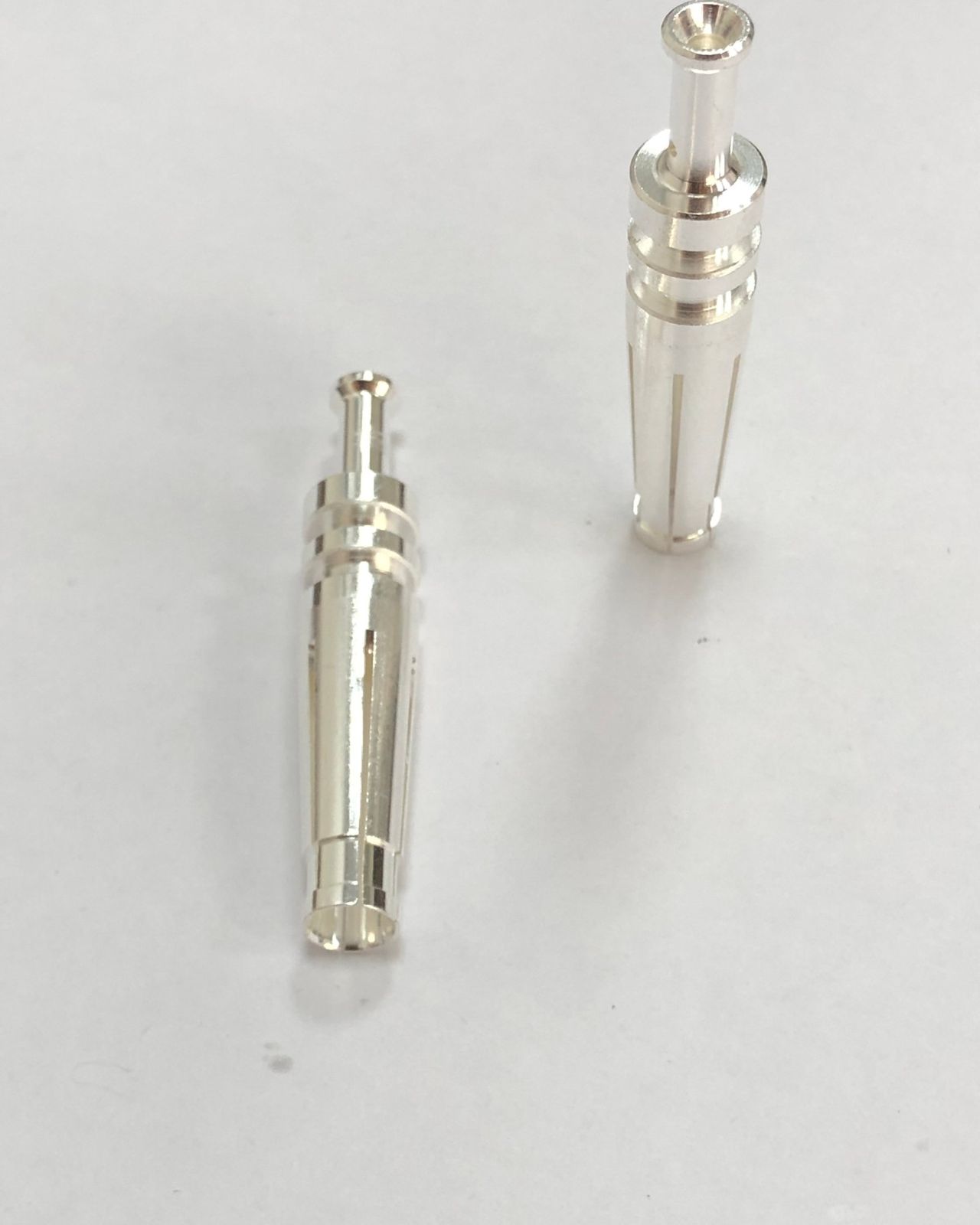
- Part
- Socket contacts
- Finish
- Silver
Why silver
Silver conducts electricity and heat better than any other metal. A silver surface keeps contact resistance low at bolted joints and sliding contacts, which is why it is the usual finish for copper busbars and switchgear contacts. See silver plating on busbars.
At radio and microwave frequencies, current flows in a thin layer at the surface of a conductor. Silver plating on a brass or aluminium part puts a highly conductive metal exactly where the current flows, which lowers losses in connectors, filters, cavities and waveguide parts.
Bright, semi-bright or matte
We plate all three finishes. ASTM B700 calls them grades:
| Finish | ASTM B700 grade | How it is produced | Where it is used |
|---|---|---|---|
| Matte | Grade A | Plating bath with no brighteners | Contacts and busbars where low contact resistance matters more than appearance |
| Semi-bright | Grade D | Addition agents in the bath | Some lustre, and softer than bright silver |
| Bright | Grade B | Brighteners in the bath | Parts where appearance is checked, and contacts that need a harder, more wear-resistant surface |
If your drawing only says "silver plate", tell us whether appearance matters and we will suggest a grade.
Purity
We plate silver of 99.0% to 99.9% purity, which covers ASTM B700 Type 1 (99.9% minimum) and Type 2 (99.0% minimum). Put the type on your drawing if your application needs a particular purity.
Tarnish
Silver reacts with sulphur compounds in the air and darkens over time. The film matters most on low-force contacts and on parts where appearance is checked at incoming inspection.
We apply a chromate-free anti-tarnish treatment after plating when you ask for it. Treated parts are checked by two tests:
- Ammonium sulphide, IS 1771. A drop of dilute ammonium sulphide on the surface must leave no black or brown mark for at least 5 minutes.
- Sodium sulphide. The part is dipped in a 10% sodium sulphide solution for 3 minutes, then hung in air for 15 minutes. It passes if no black spots appear.
ASTM B700 Class S specifies a supplementary chromate treatment, while our anti-tarnish treatment is chromate-free. If your drawing calls for Class S, tell us in your enquiry so we can discuss it.
Bimetal parts
We also silver plate bimetal parts, such as contacts with a tungsten section joined to a copper or brass body. Tell us both materials in your enquiry, and which surfaces need silver.
Underlayers
Silver is plated over a thin strike so that it bonds to the base metal. On brass, a copper or nickel underlayer stops zinc from moving into the silver. Nickel is also used under silver on parts that run hot, because it slows copper diffusion. Steel parts normally need a nickel underlayer. Aluminium needs its own pre-treatment first; see plating on aluminium.
For RF parts where passive intermodulation (PIM) matters, nickel underlayers are usually avoided because nickel is magnetic. Copper or tri-metal are common alternatives. If your drawing does not specify an underlayer, we will ask before plating.
What to put on your drawing or enquiry
- Base material and grade
- Minimum silver thickness in µm, and the surfaces it applies to
- Finish: bright, semi-bright or matte
- Underlayer, if any, and its thickness
- Areas to mask
- Whether anti-tarnish treatment is needed
- The plating specification and revision, if you work to one
- Quantity per lot and expected yearly volume
Specifications
We plate silver to ASTM B700, the standard for electroplated silver for engineering use. A full callout gives the type, grade, class and thickness, for example ASTM B700, Type 1, Grade A, Class N, 8 µm min. Silver plating to ASTM B700 explains each part of the callout and how we inspect to it.
Other specifications you may see on drawings:
| Specification | What it covers |
|---|---|
| ISO 4521 | The international standard for electroplated silver and silver alloy coatings for engineering use. |
| IS 1771 | Indian Standard for electroplated silver coatings for general engineering use. Includes the tarnish resistance test above. |
| SAE AMS 2410 | Silver plating with a nickel strike, high bake. Used on aerospace drawings. |
| SAE AMS 2411 | Silver plating for high-temperature applications. |
| SAE AMS 2412 | Silver plating with a copper strike, low bake. |
| QQ-S-365 | Older US federal specification, cancelled in 2001. ASTM B700 is the usual replacement. |
Send the specification and revision with your drawing and we will confirm whether we can meet it.
Thickness measurement
Silver thickness is measured on our Fischerscope X-ray fluorescence (XRF) instrument. XRF measures coating thickness without damaging the part. The method is described in ISO 3497 and ASTM B568.
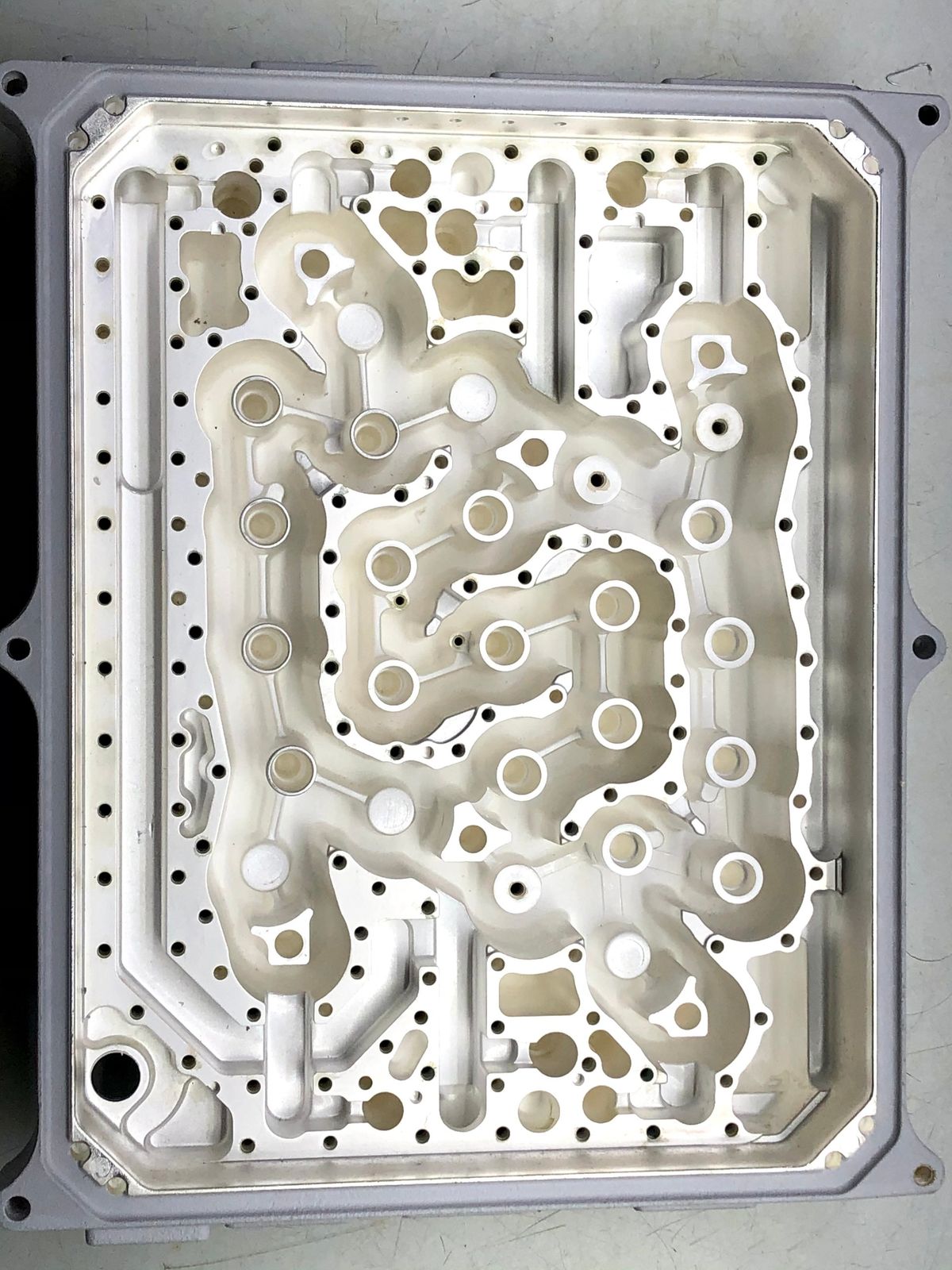
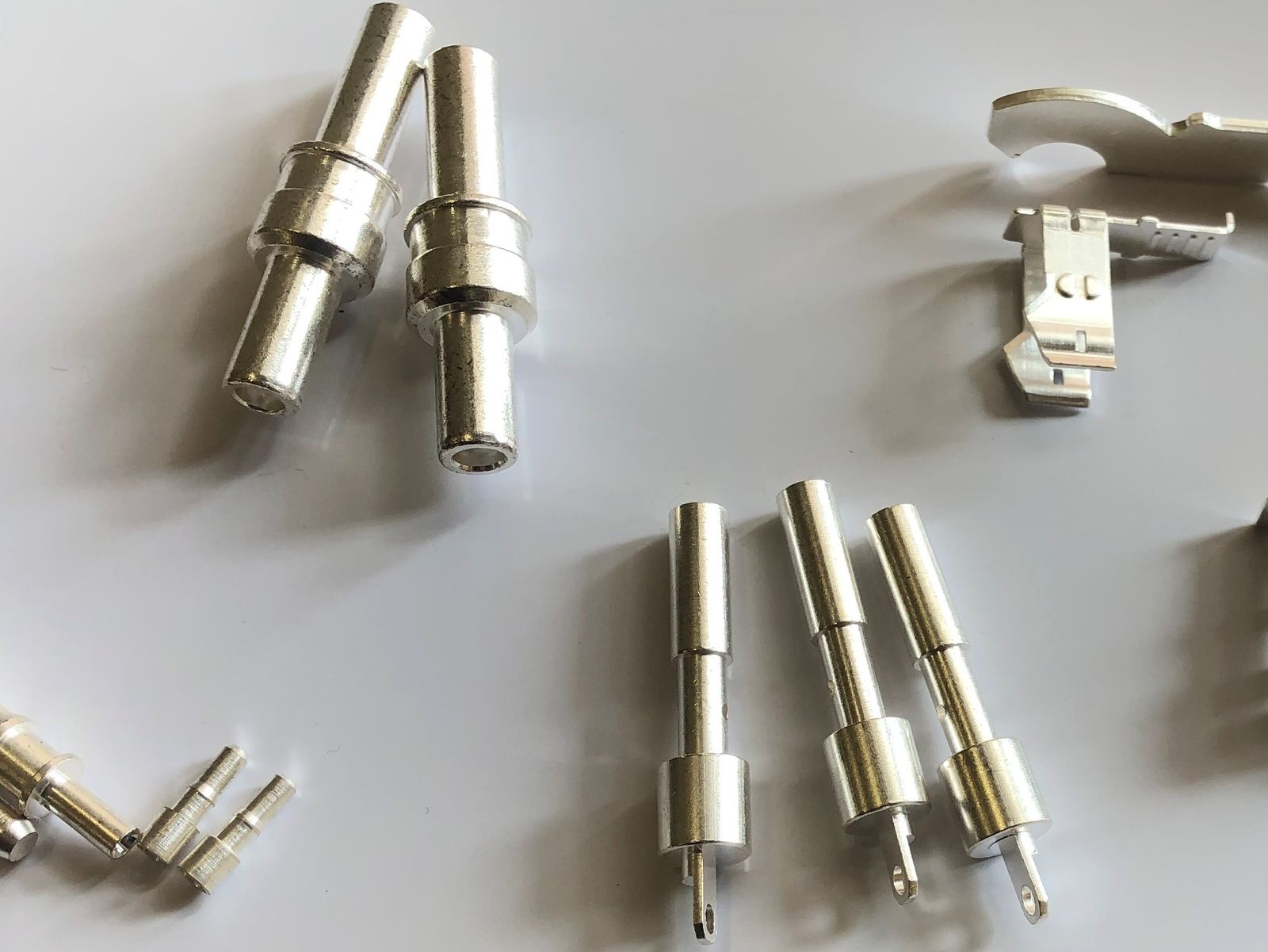
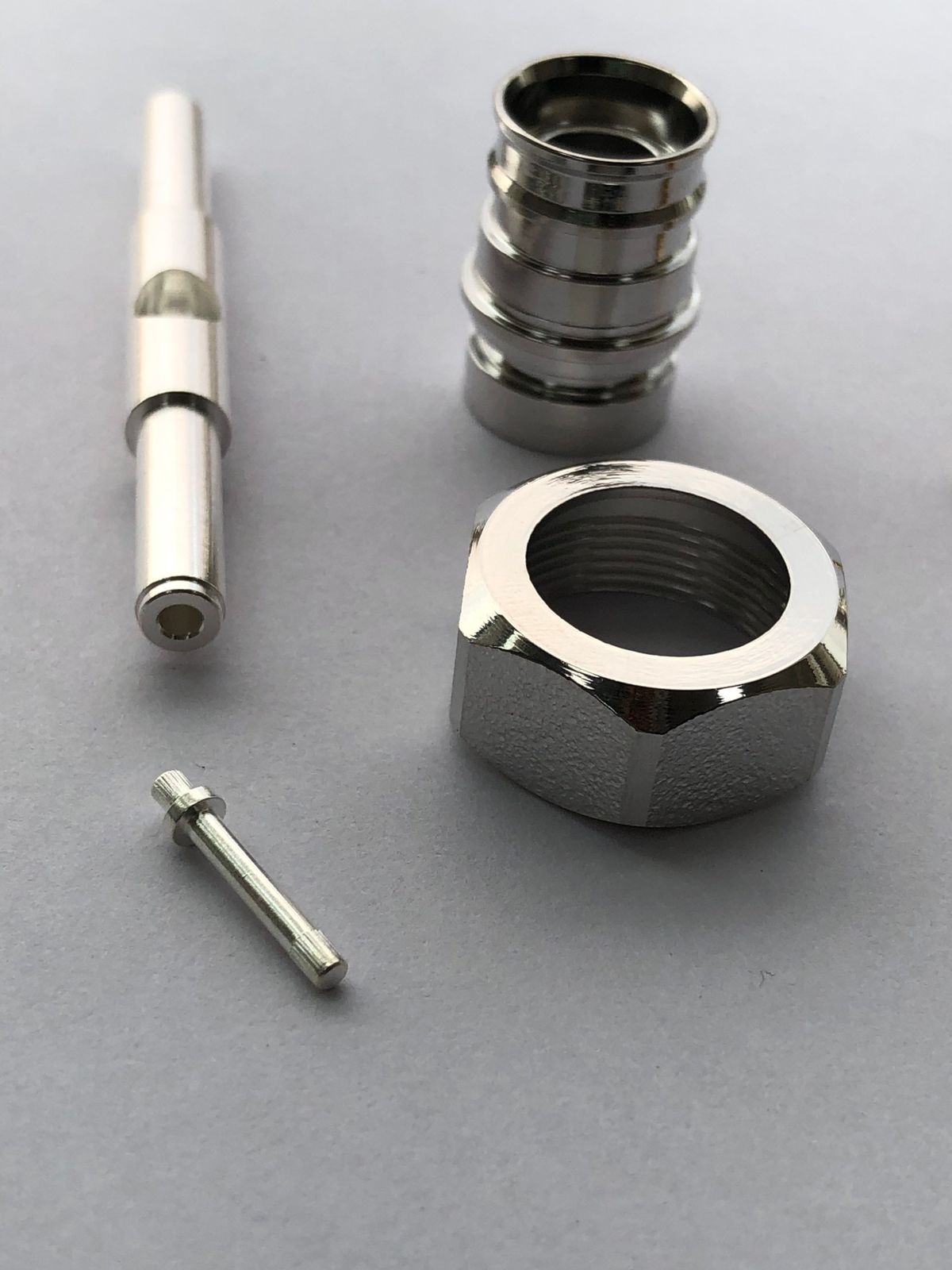
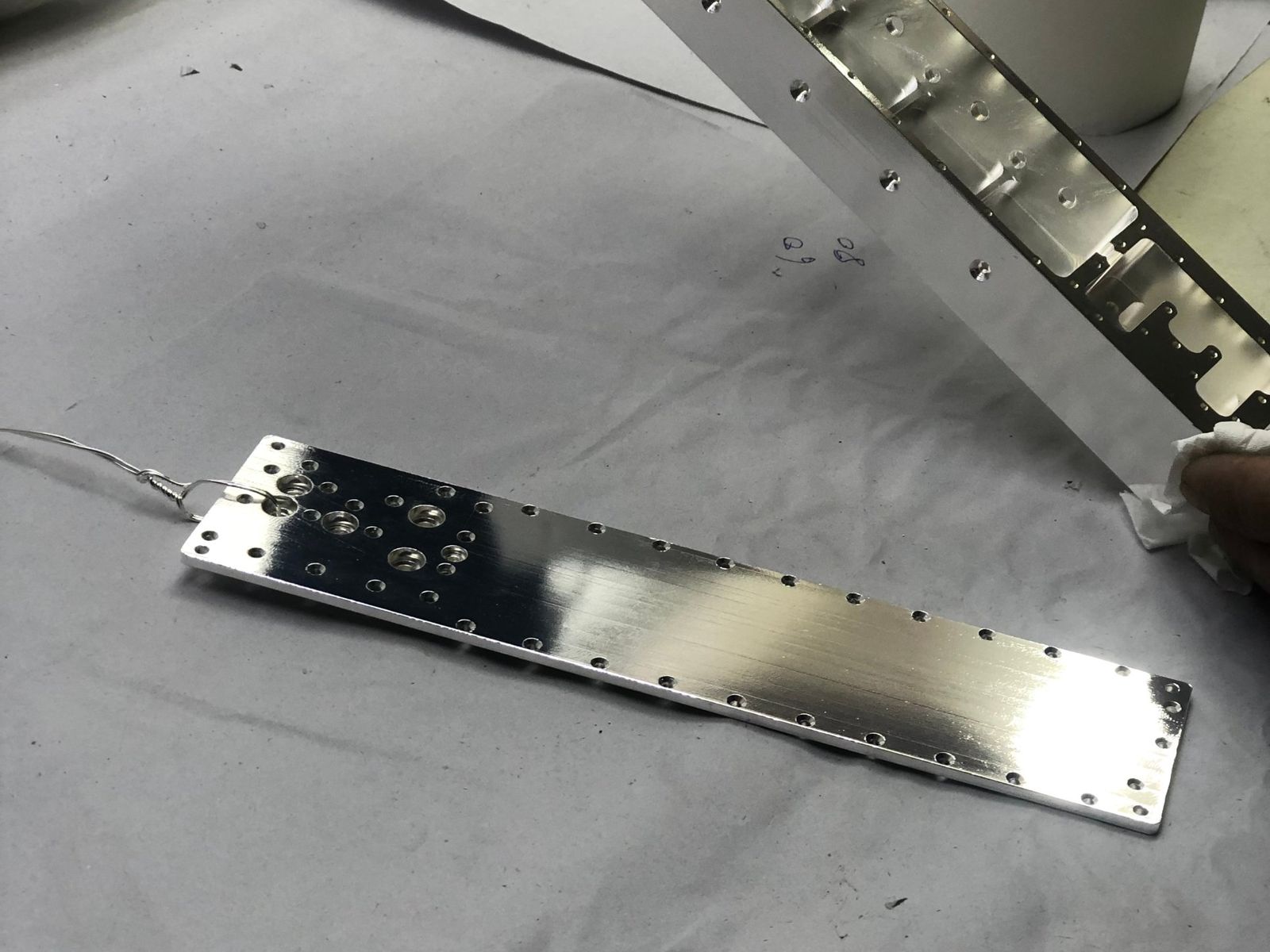
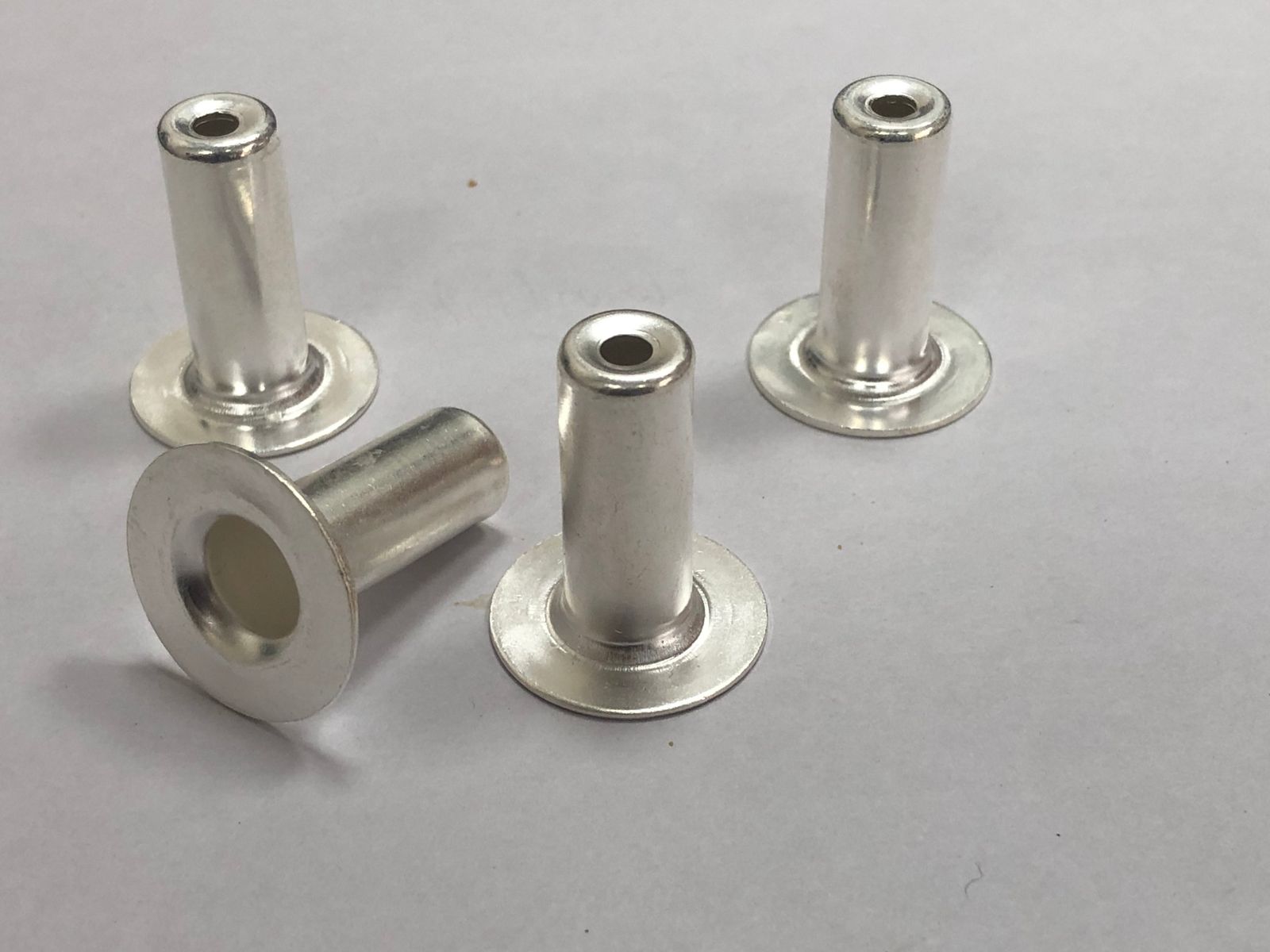
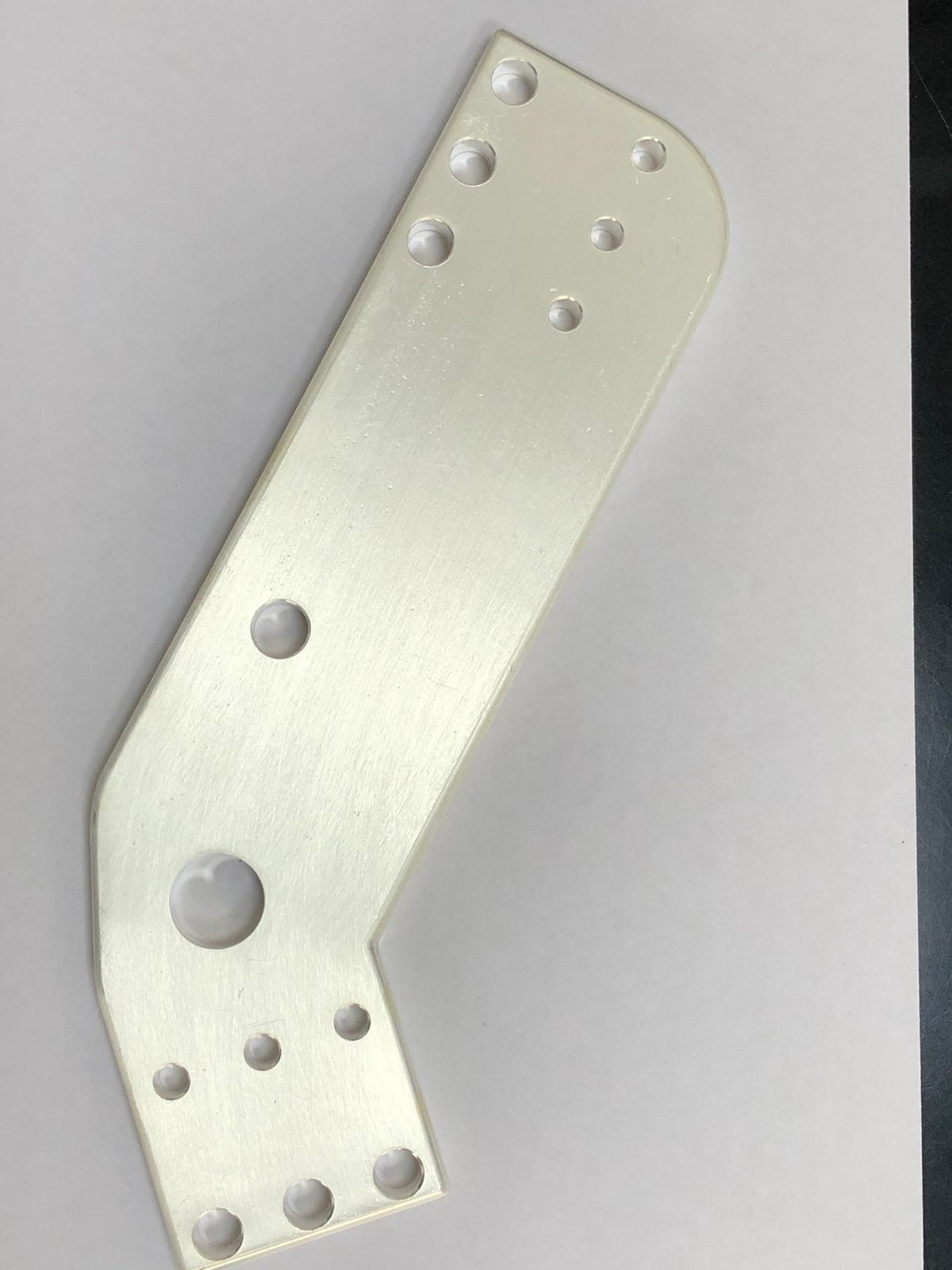
Parts we have silver plated
Also consider
Email your drawing for a quote
Attach the drawing and include as much of this list as you can. The more you send, the fewer questions we need to ask before quoting.
- Drawing: PDF, DWG, DXF or STEP
- Base material and grade
- Finish, and thickness in µm
- Quantity per lot and yearly volume
- Areas to mask, if any
- Standard or customer specification